Unfiguring
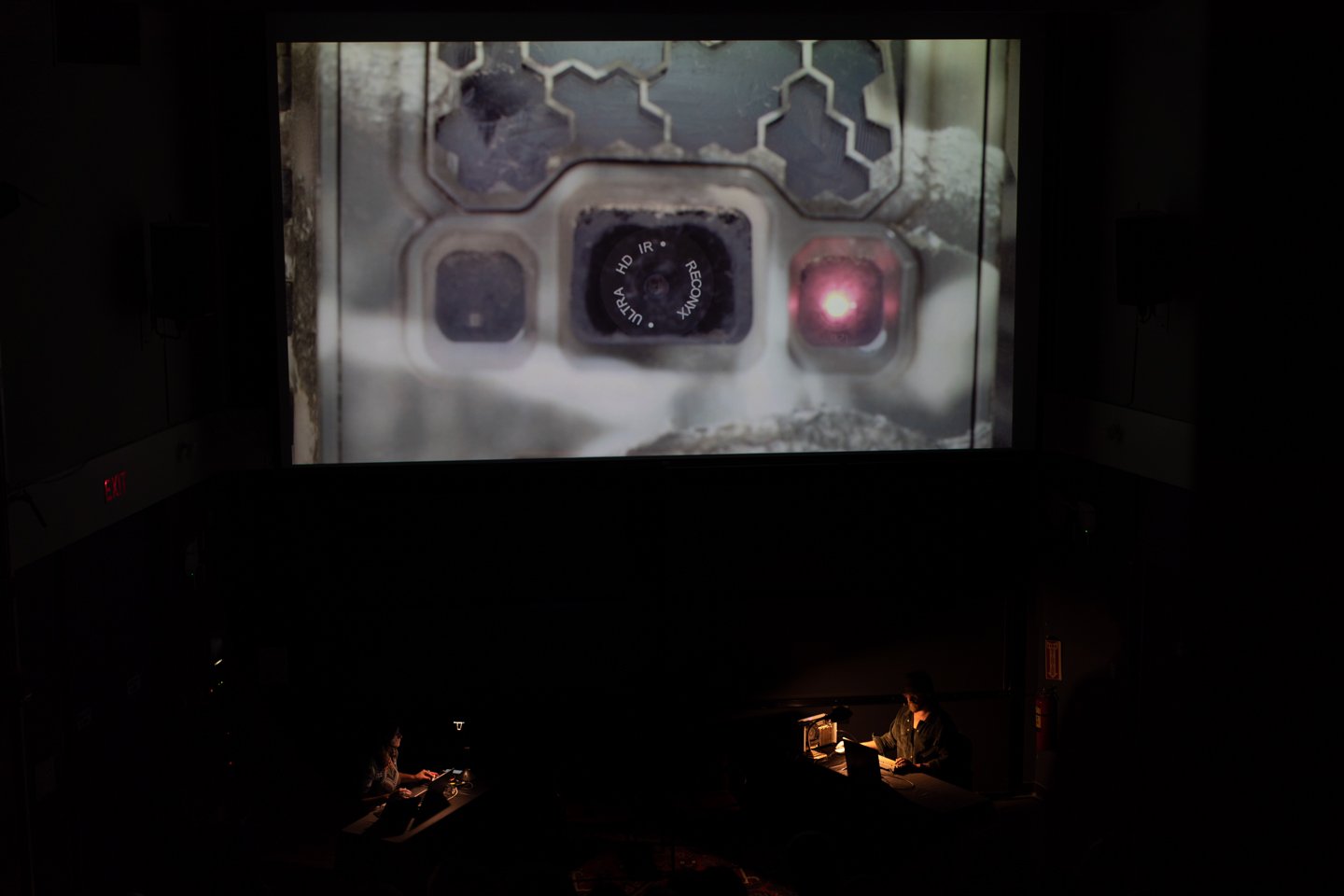
Participants at the 2024 Unfiguring conference (left) and Strata: A Performance of Topography by Hannah Jayanti and Alexander Porter (right).
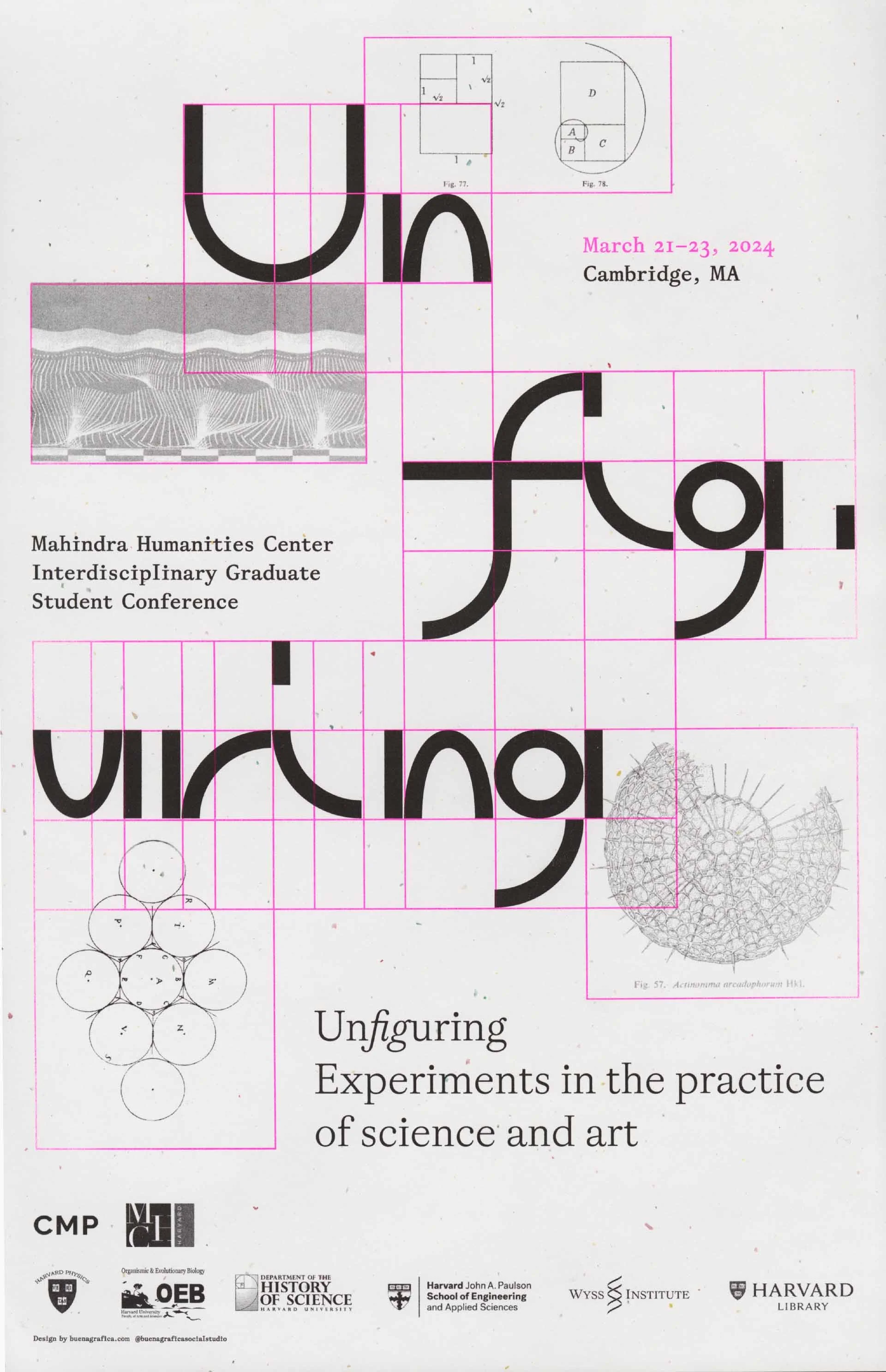
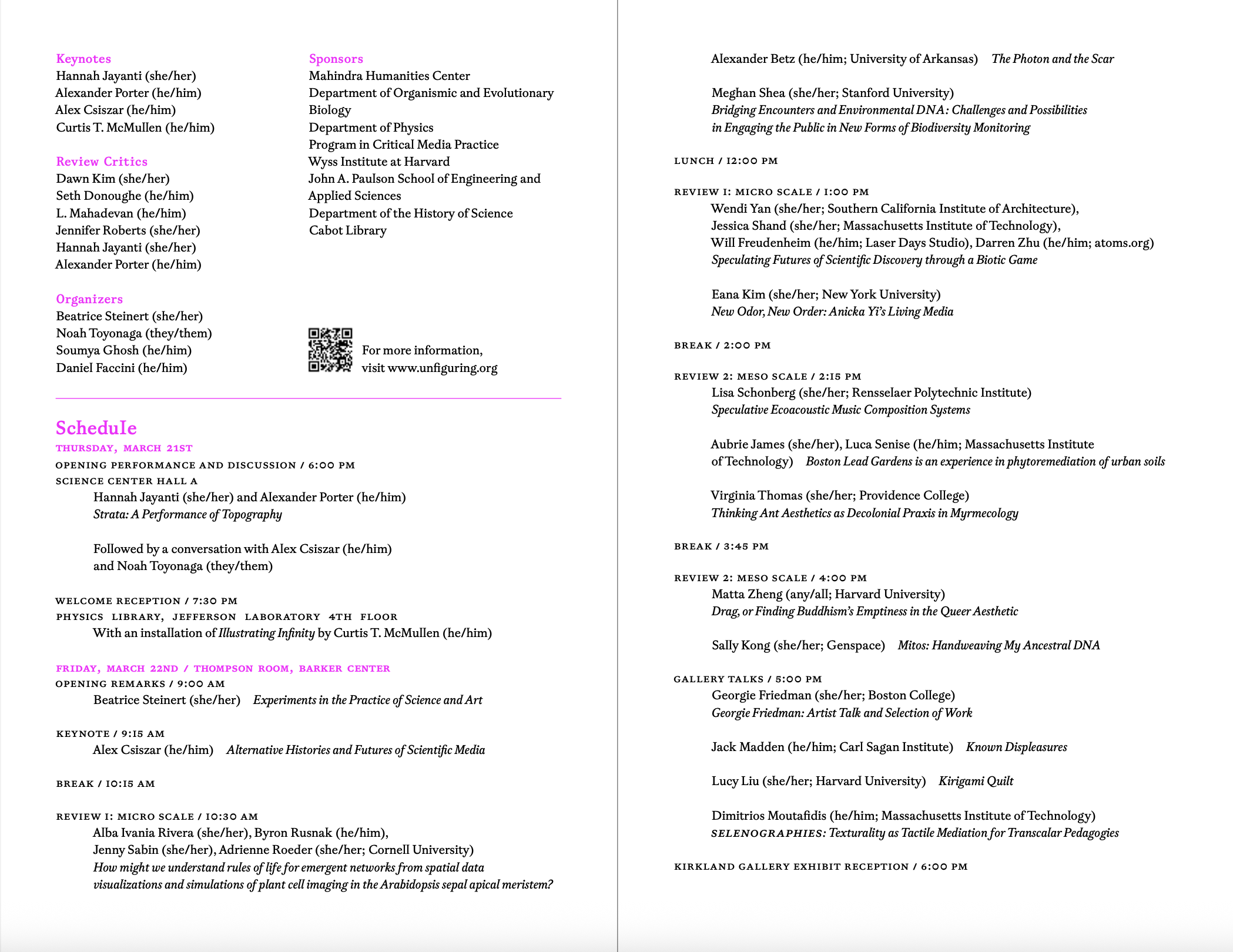
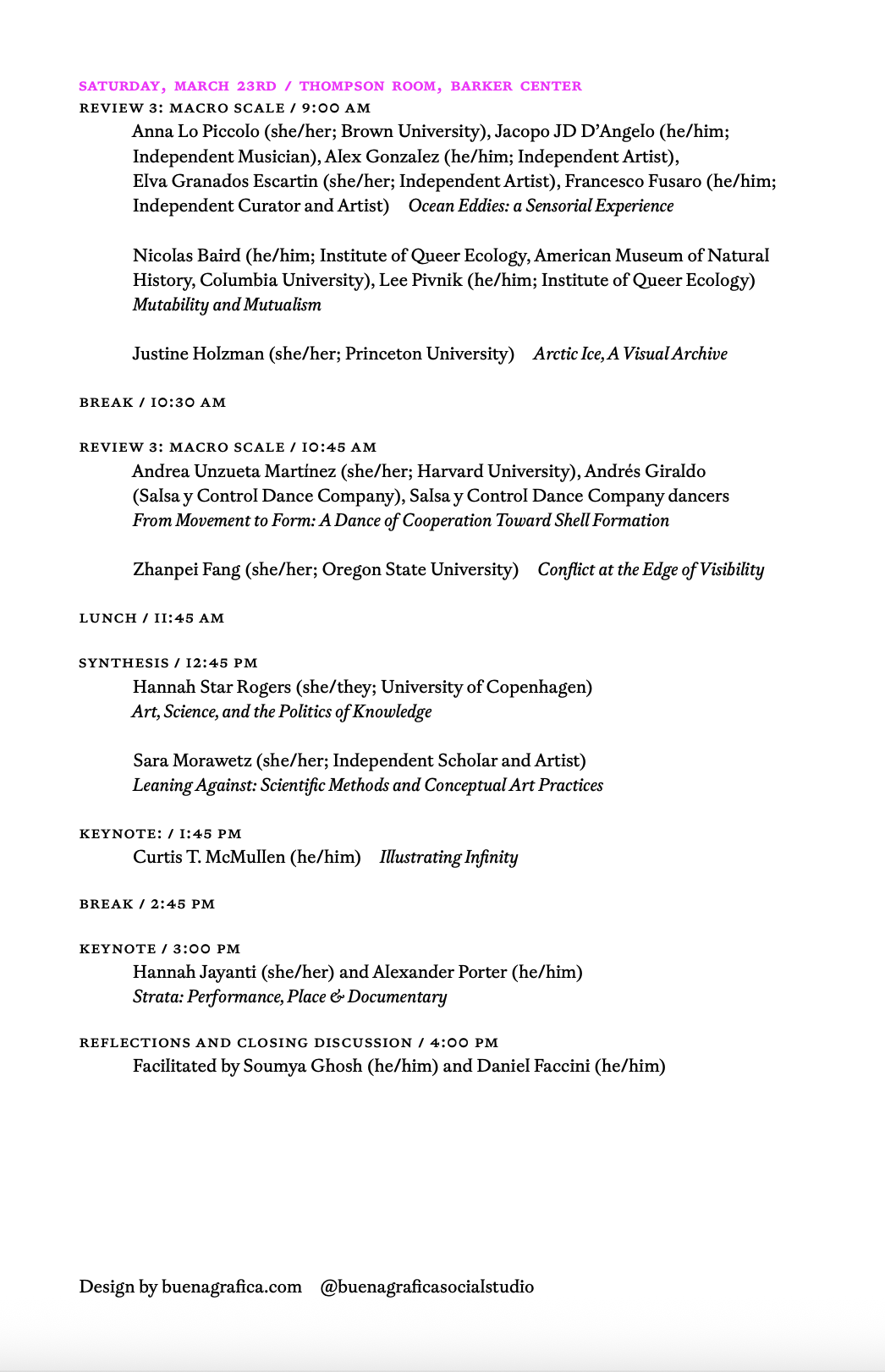
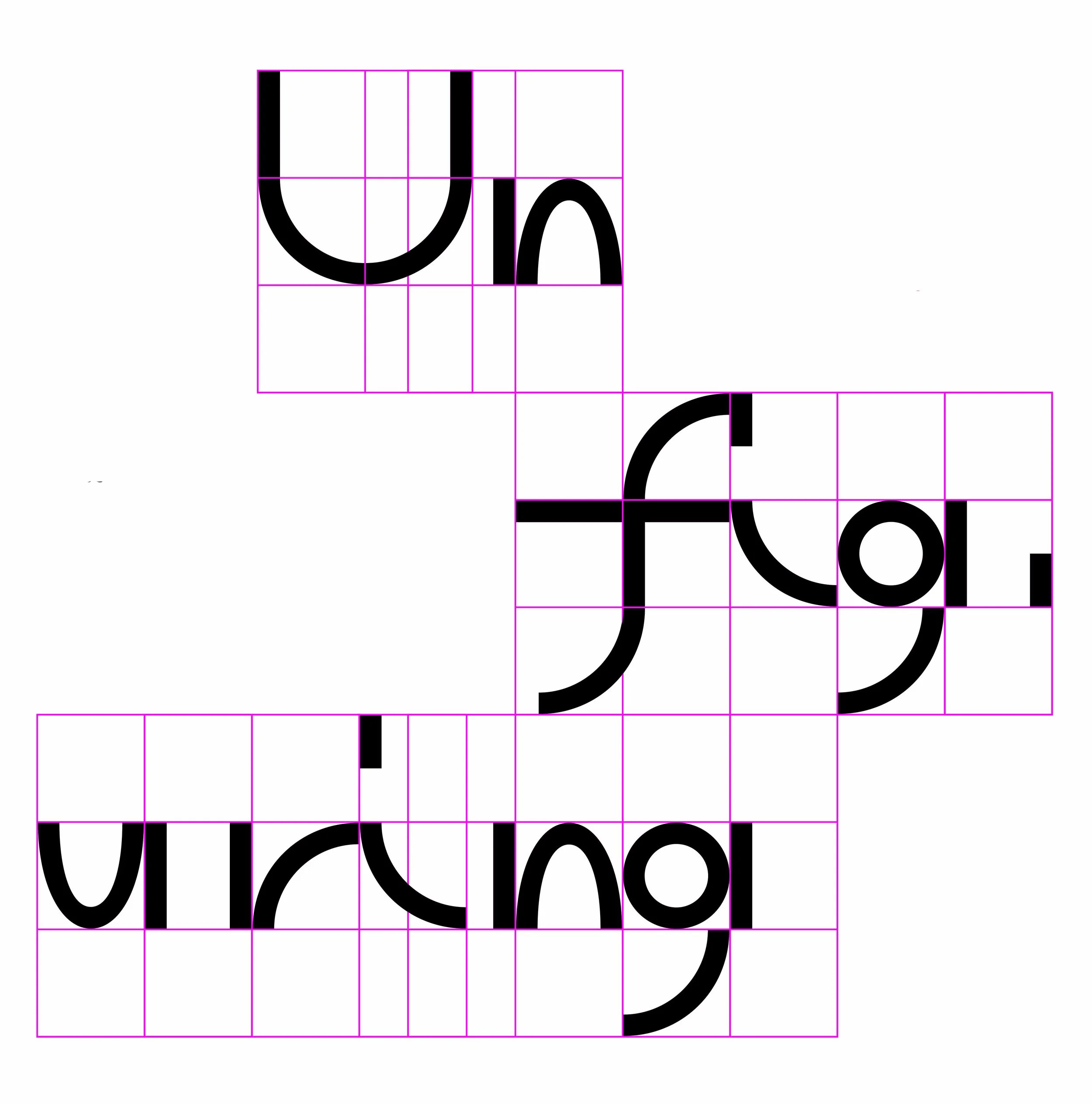
Unfiguring’s 2024 conference program.
From the first studies of the moon’s surface in Galileo’s Sidereus Nuncius (1610) and Robert Hooke’s microscopic observations in Micrographia (1665), scientists have crafted scientific stories across a range of visual and literary genres. Yet since the late-19th century, the main output of scientific research has remained the scientific journal article, a communication format that imposes a linear and 2D logic. To explore how we might expand scientific research products, I co-founded a collaborative interdisciplinary project called Unfiguring: Experiments in the Practice of Science and Art. Unfiguring’s award-winning visual identity and communication materials are designed by Buena Gráfica Social Studio.
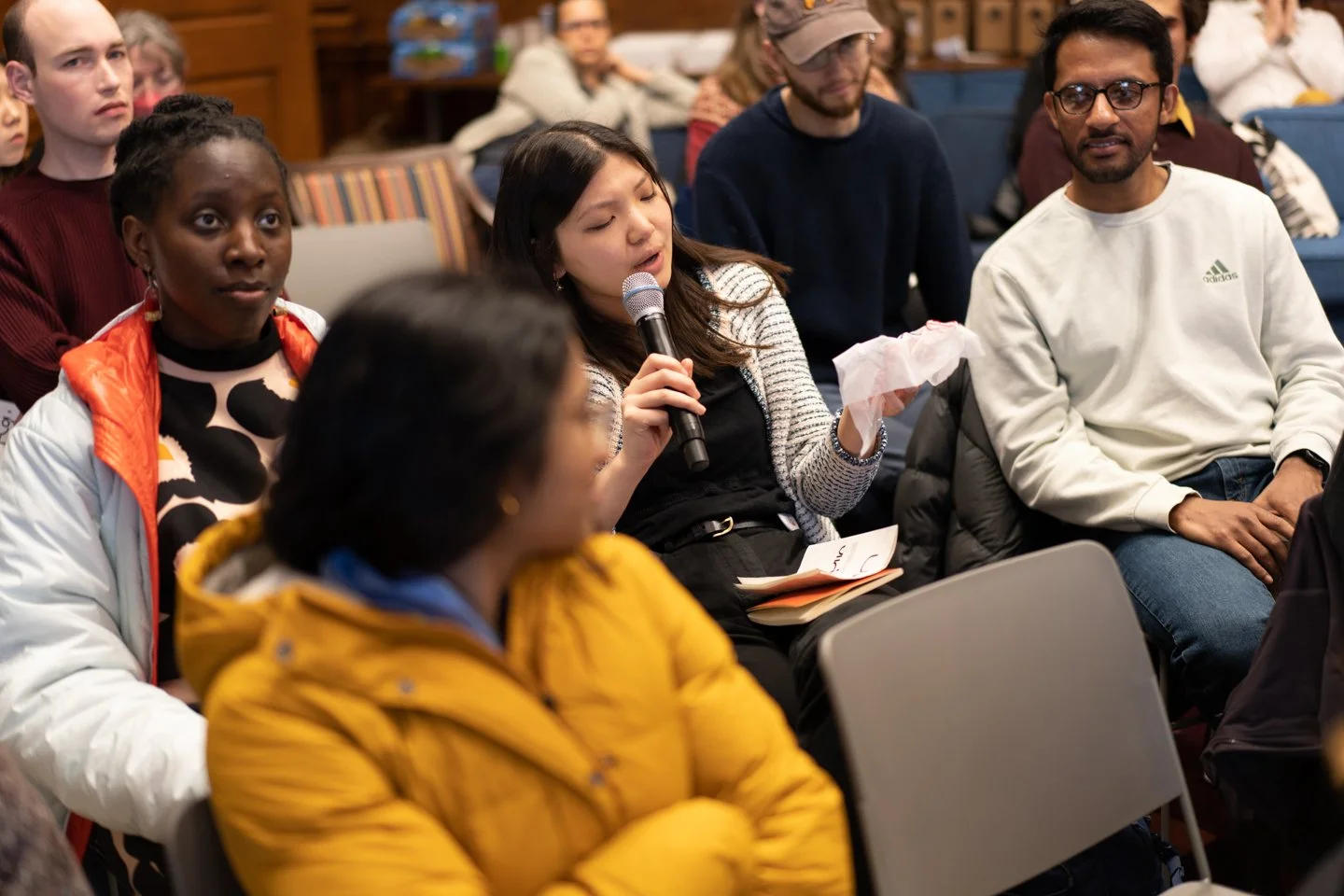
In 2024, Unfiguring held its inaugural conference at Harvard’s Mahindra Humanities Center. The meeting brought together keynotes, speakers, and participants spanning STEM, art, design, and the humanities. Scientist, artist, writer, and Unfiguring participant Mary O’Reilly wrote about the conference on her Substack, The Art of Basic Science:
"Forms of expression [at Unfiguring] included dance, performative art, sonification (using sound to convey information, sometimes even by ants with tiny microphones), public art installations of bacteria (pungent was a word used to describe these), poetry, gaming, dance, architecture, documentary film, animation set to original music, weaving, and more...
These two days gave me three new hypotheses: 1) Setting an intention to use the art process as a way to meditate on assumptions being used while making the art might give way to more flashes of insight along the way. Failing that, then 2) giving scientists who want to build a creative practice into their work not only permission but encouragement to do so will keep more of these people in science, and we need them. And finally, 3) exposing all scientists to science-inspired art, whether they practice it themselves or not, will ignite their curiosity, as it did mine again and again in this fabulous conference.”